


For a couple of days in November 2025, the historic InterContinental Mark Hopkins San Francisco was the center of the analyst relations universe. AR Engage Live 2025 brought together 150 AR practitioners who were eager to learn, network, and have some fun—and they did exactly that! When attendees weren’t catching up and exchanging ideas over coffee, they were enjoying a series of keynotes, breakouts, and fireside chats, with each session featuring one or more of their peers.
When it was over, we asked attendees to complete a quick survey that included the question, “What did you like most about this event?” Here’s a small sample of the answers we got:
✅ “Excellent sessions that sparked a ton of practical ideas.”
✅ “The content definitely targeted higher level strategic guidance than I’ve seen at other AR conferences.”
✅ “The sessions were fantastic.”
It’s true: The practitioners who took the stage brought their A-game and then some.
Here are some of the actionable ideas they shared with the audience.
1. Survey colleagues after inquiries (Jerry Weltsch, Head of AR at Asana)
Whenever one of Jerry’s colleagues at Asana does an inquiry with an analyst, Jerry asks them to rate the interaction on a scale of “Wow, I really learned something new that will change the way I think” to “That was a complete waste of time.” This survey data helps him demonstrate the value of AR and assess whether each analyst is worth engaging.
2. Complement “big bang briefings” with “microinteractions” (Carter Lusher, Founder & Principal Analyst at Lusher Advisory)
Thanks to AI, analysts are publishing more content than ever before, and they’re publishing it more quickly than ever before. Which means it no longer makes sense for vendors to limit their analyst engagement to what Carter calls “big bang briefings”—occasional presentations where you share multiple quarters worth of updates. As a complement, Carter says AR leaders should get in the habit of “microinteractions,” frequently engaging analysts with bite-sized updates.
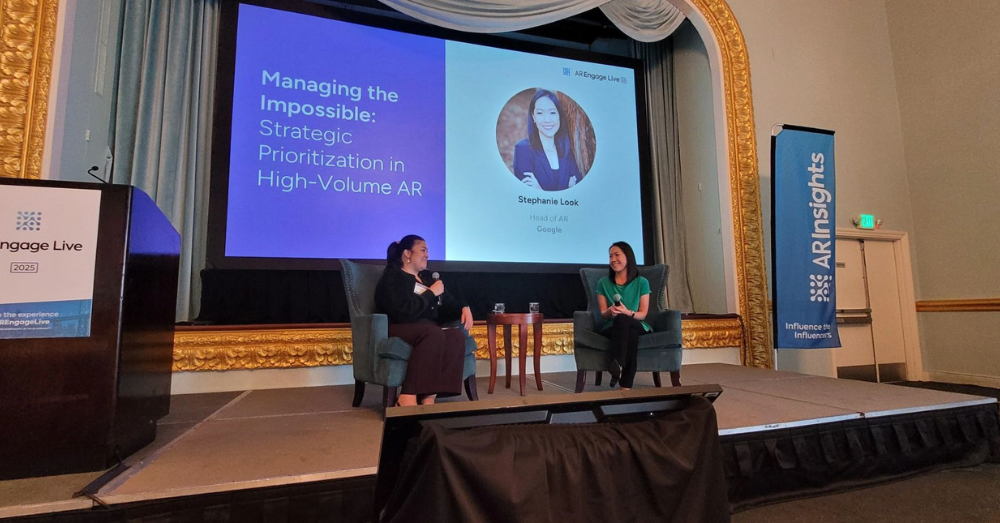
3. Maximize the impact of executive travel (Stephanie Look, Head of AR at Google)
If a Google executive is hitting the road for a customer or partner event, Stephanie’s team identifies the analysts who will be there and schedules time for the executive to meet face-to-face with them. A simple tactic that pays large dividends—exactly the kind of thing time-crunched AR leaders should be doing.
4. Schedule recurring meetings with senior stakeholders (Nathan Herrman, AR Manager at Ericsson)
Nathan’s take: If you’re leading AR for a specific product, you should have a recurring meeting with the VP/GM of the product. Not just to ask questions—but also to offer insights. “It’s about becoming a trusted voice in the conversation,” Nathan said on stage. “That’s what executive presence is. It’s realizing that we all have the ability—and I think the mandate—to be a part of those conversations.”
5. Pause (Brenna Karr, Global Head of AR at Palo Alto Networks)
When Brenna’s on a call with an executive and notices that there’s five minutes left, she asks them, “Do you have feedback for AR?” And then she pauses for however long she needs to. In her experience, if you pause for long enough, executives will fill the space with highly valuable feedback.
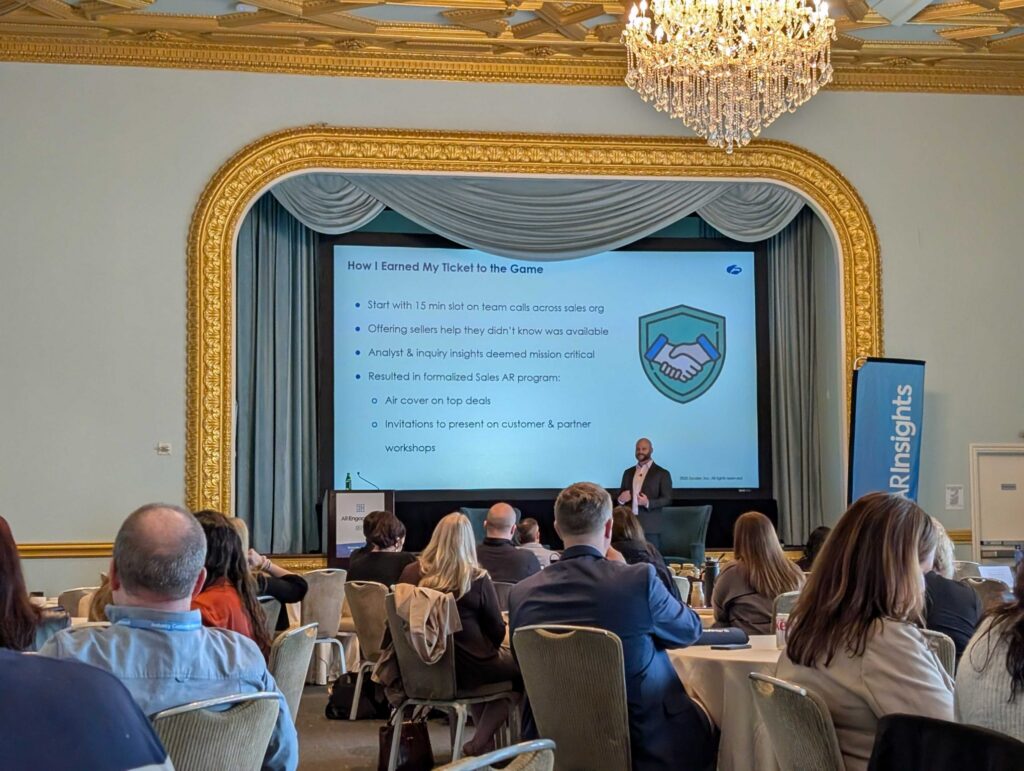
6. Join sales team calls (Chris Burrell, Director of AR at Zscaler)
A couple of months before AR Engage Live 2025, the Zscaler sales team invited Chris to join them in their box at a Philadelphia Phillies game—a crystal clear indicator of how much they trust him. How did Chris earn that trust? It started very simply: He joined their team calls and gave them valuable intelligence. For example, when a new Magic Quadrant would come out, Chris would join their call and spend a few minutes advising them on how to position their ranking to customers.
7. Ask analysts to review marketing campaign plans (Arthur Bailey, Chief of Staff at Mimik)
In Arthur’s view, an overlooked way for AR teams to demonstrate value is to invite analysts into the marketing campaign planning process. Why? Because a good analyst can easily tell you whether a campaign is going to resonate with the target audience. As an AR leader, if you help prevent your company from going to market with campaigns that are doomed to fail, that’s extraordinarily valuable. So, Arthur’s recommendation is to create a close bond with your marketing team, such that they allow you to bring analysts into the campaign planning process.
8. Rethink processes—don’t just speed them up (Jen Borun, Sr. Director of Analyst Relations & Strategic Engagement at Cornerstone OnDemand)
At this point, everyone knows that AI can help them do things faster (responding to RFIs, for example). Jen’s advice to AR leaders is to zoom out and look for opportunities where AI can help you not just do the same things faster, but also do new things you couldn’t do before. As an example, she brought up RFIs for IDC MarketScapes. Using AI to scrape publicly available information, IDC pre-populates vendors’ answers to RFI questions, and then gives vendors an opportunity to modify the answers. When Jen’s team reviewed a pre-populated RFI that IDC sent them, they realized that they could use it to identify gaps in their website content—IDC had essentially given them a free website audit report!
Sign up for AR Engage Live updates
The speaker lineup at AR Engage Live 2026 will be equally stellar. Want to be among the first to know what we have planned? Subscribe here for updates.
